
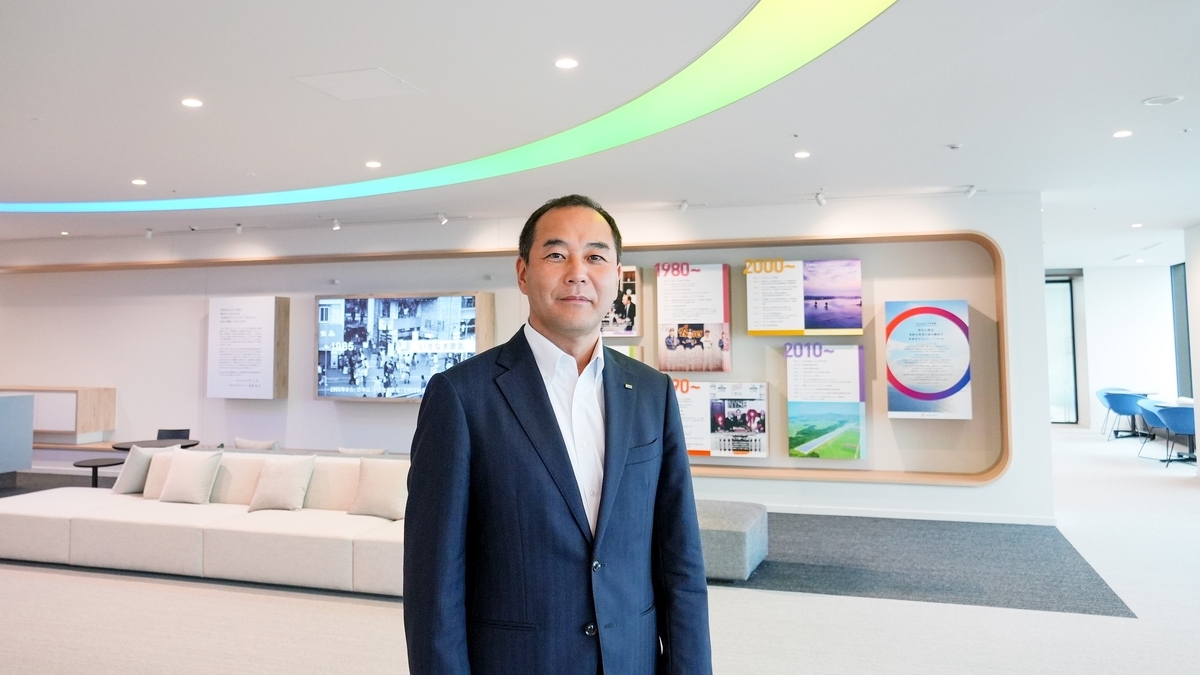
As ORIX embarks on one of the most significant transformations in its history, Group CFO and CSO Masataka Yamada has joined the senior management team with a clear mandate: help CEO Hidetake Takahashi turn an ambitious growth strategy into reality.
When Mr. Takahashi unveiled the ORIX Group Growth Strategy 2035 in May 2025, he set out a vision that would require not just strategic clarity but financial discipline and the credibility to execute at scale. Mr. Yamada, who joined ORIX in early 2026 after three decades at JPMorgan Securities Japan Co., Ltd., brings both. His dual role overseeing finance and strategy reflects the fact that ORIX’s evolution demands equal parts financial rigor and strategic boldness.
"What Hidetake-san talks about -- the asset management transformation, bringing in third-party money to rotate assets -- I really want to help push that model forward and help execute that vision," Mr. Yamada says, referring to the CEO’s vision for ORIX.
From Balance Sheet to Asset Rotation
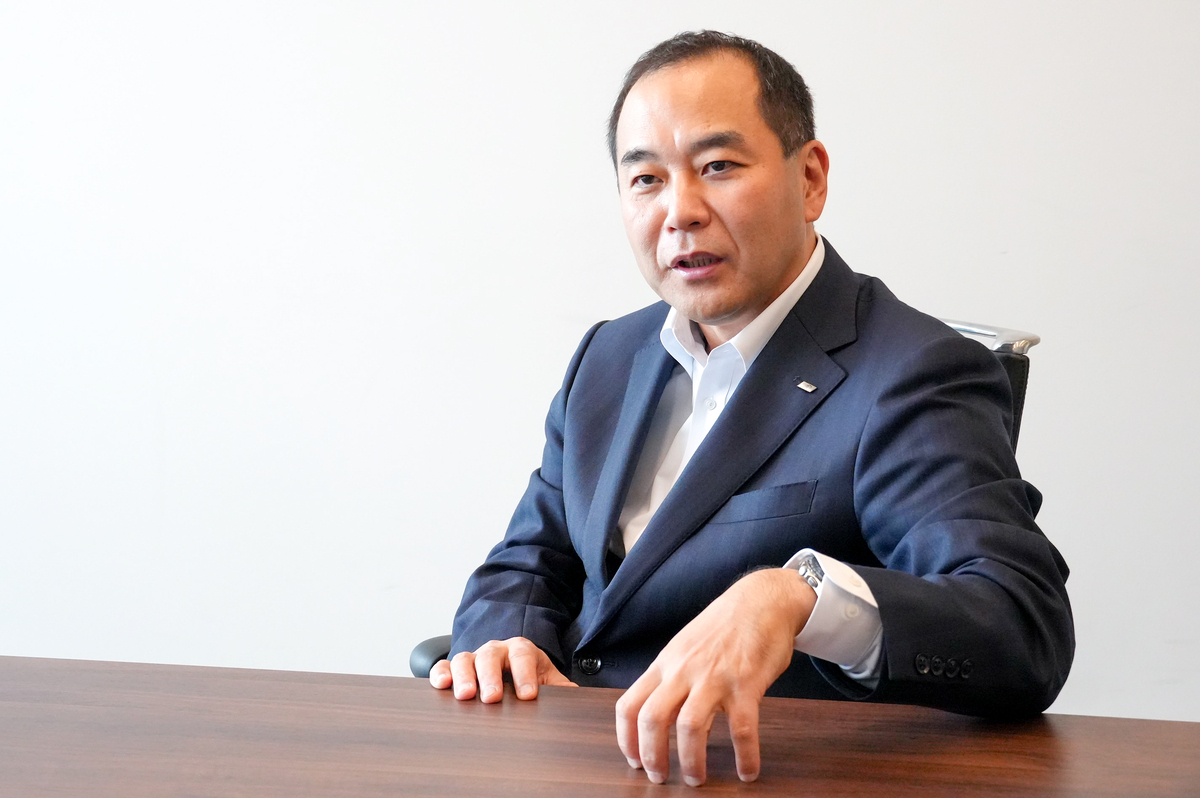
At the heart of the new strategy is a fundamental shift in how ORIX grows. For decades, the company expanded by accumulating assets on its own balance sheet, building a portfolio now worth over 18 trillion yen. That model served ORIX well. But continuing on the same trajectory -- piling assets toward 20, 25, or 30 trillion yen -- creates a problem: rating agency constraints begin to limit strategic freedom, and capital efficiency suffers.
The solution is to move to an ‘asset light’ or ‘asset rotation’ model. Rather than holding assets indefinitely, ORIX originates them, moves them into funds backed by third-party capital, frees up balance sheet space, and then originates again. The cycle repeats at speed – and can be applied to whole business units.
"We fund with third-party money. But who originates these assets? Still ORIX," he explains. "Moving from using only our own balance sheet to also using third-party money to further increase assets -- that's the rotation model."
The opportunity is significant. Global capital is actively seeking exposure to Japan, and major Western alternative asset managers have the money but lack the on-the-ground origination capability that ORIX has built over decades. "ORIX has all of that in place," Mr. Yamada says. "That's why they come to us wanting to partner."
But he is candid about the challenges involved -- the model is being built almost from scratch, and it will require a fundamental change in how the company works. That shift would still require fundamentally rethinking the asset origination process: instead of selecting assets that suit ORIX's balance sheet, the company must start planning from what kind of assets third-party investors want to invest in and then go out and originate them.
Not every part of ORIX will, or indeed needs to, follow this path. For many, the Group’s other business model – ‘business solutions’ – remains appropriate. Some have their own logic: auto leasing in Japan, for instance, is mature but generates relatively high returns on equity through adding maintenance services, insurance, and other products, making it a strategic relationship asset rather than a pure balance sheet play. Others that cannot garner high return on equity or do not necessarily fit into the long-term strategy will be candidates for divestment. In April, ORIX agreed to sell its banking unit to Daiwa Next Bank, a Daiwa Securities Group company, for 370 billion yen ($2.3 billion).
The geographic focus, at least initially, is Japan. Infrastructure assets, like real estate including offices, logistics facilities and residences, are the most natural fit for the yen-denominated rotation model. On the dollar side, ORIX's US platform, ORIX USA, already has elements of the model in place. There is a significant opportunity to connect those dollar-denominated assets with Japanese institutional investors, particularly life insurance companies, who have capital to deploy but limited access to these products.
Balancing Defense and Attack
Yamada holds two roles that might appear to pull in opposite directions. As CFO, he is the guardian of financial soundness -- conservative, disciplined, focused on ratings and capital structure. As CSO, he is the architect of growth -- aggressive, forward-looking, willing to accept risk in pursuit of strategic opportunity.
He sees the tension as a feature, not a flaw. "Balance is important, and seeing both sides is crucial for creating optimal balance," he says. On credit ratings, specifically, Mr. Yamada takes a pragmatic view: "If maintaining ratings sacrifices strategic freedom, that's putting the cart before the horse."
The minimum floor of financial soundness is non-negotiable, he says -- that is a given regardless of strategy. But within the range above that floor, the balance between further soundness and strategic ambition is exactly where the dual CFO-CSO role adds value.
Expect Turbulence, But Not Danger
There might be some volatility in ORIX's financial results over the next few years. The transition to an asset light model, combined with more active capital recycling, will create timing gaps: assets sold before replacements are acquired, revenue temporarily reduced as fee income replaces balance sheet returns, balance sheets temporarily shrinking during transitions.
"The more aggressively we do capital recycling, the more gaps appear, creating bumpiness," he says. His analogy is an aircraft in turbulence: there will be shaking, but no safety concerns, and the destination is clear. "There might be some turbulence, some shaking, but we'll definitely reach our destination."
For employees anxious about what bumpy numbers might mean, his message is to take a medium-to-long-term view. The company is also reviewing compensation systems to ensure individual efforts are properly rewarded through the transition.
Rediscovering the 'Wild' Company
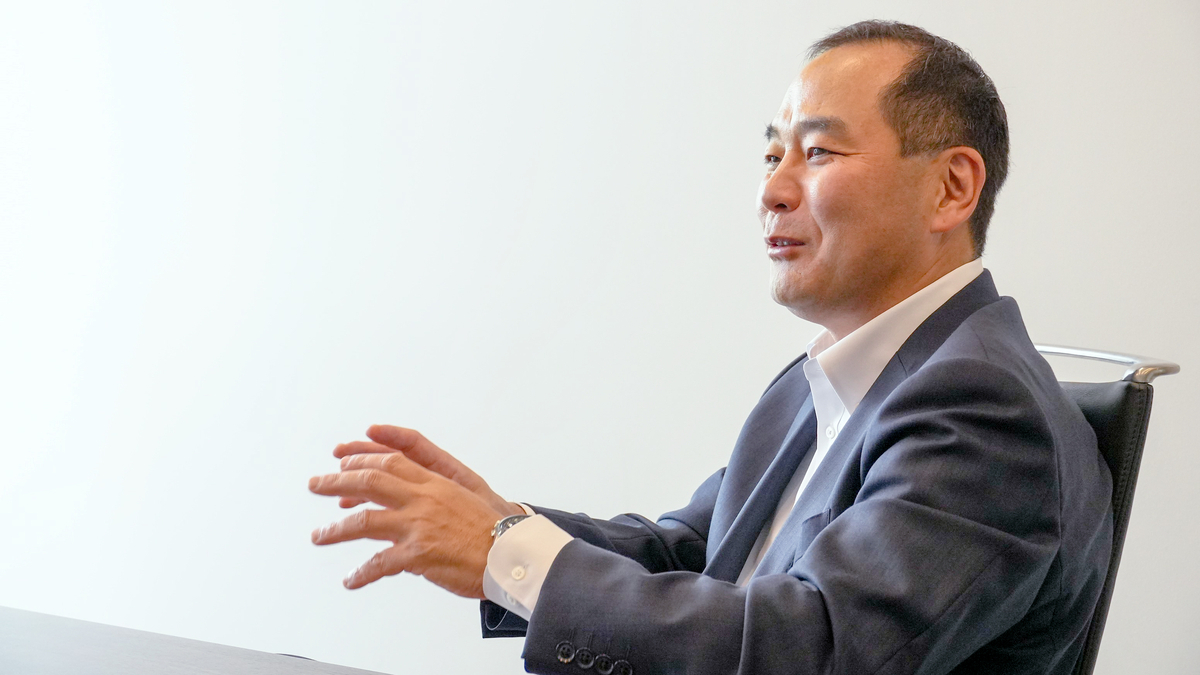
One of the most striking observations Yamada offers is about ORIX's identity. From the outside, after more than 20 years covering the company as a client, he had formed a clear impression: ORIX was a free-spirited, unconventional organization -- a "wild" company that moved fast and broke rules others wouldn't touch.
"My image was that ORIX was a little wild," he says, referring to the company's reputation for entrepreneurial energy. "But when I actually joined, I found it was surprisingly serious, quite mature as an organization."
He is careful to frame this as a natural consequence of growth rather than a criticism. As talented, professional people joined over the years, the organization matured. But maturity has a cost. "There's probably some big company disease, simply put." Decision-making has slowed. Internal logic has become more dominant than external orientation. Communication -- especially across borders -- is thinner than it should be.
"Globally, honestly we are not sufficiently connected,” Mr. Yamada notes. We need more communication. Different salespeople visit the same customers – it’s confusing."
His ambition is to help ORIX recapture some of its original spirit without losing the professionalism it has built. "The underlying wild, free-spirited approach to business that ORIX has -- I think we should reaffirm and share that more broadly among everyone." That is why ORIX defined a Group-wide Culture, which outlines a set of values that act as a frame of reference for all its global employees to live and champion: Find Power in Diversity. Find Adventure in Challenge. Find Opportunity in Change.
The company's strengths are real and substantial. Its unique position -- combining financial sophistication with operational expertise across real assets, sitting between banks (which can only do loans) and trading companies (which lack financial depth) -- gives it capabilities that few organizations anywhere can match. "We have tremendous potential," Mr. Yamada says. "But it's still just potential, not yet realized."
Just Be Yourself
For ORIX's 37,000 employees across 30 countries and regions, Mr. Yamada's message is one of opportunity rather than anxiety. The transformation underway is significant, but it opens doors.
He encourages employees -- especially younger ones -- to be curious, to look outward, and to resist the pull of internal logic. "Don't get too confined within the company. Look outside, both in work-related ways and unrelated ways. By doing so, you can probably view yourself and the company more objectively."
On communication, his advice is simple and direct: pick up the phone. "There's so much that doesn't come through in emails, especially between different cultures. More person-to-person communication would make things smoother and generate business, especially globally."
On challenge, he resists the idea that it requires grand gestures. "Challenge doesn't have to be grand. Within what you're doing, try various things." Making small experiments, he says, is how interesting work develops.
And above all, he wants people to enjoy what they do. His personal motto -- "be yourself" -- captures a philosophy he developed over 30 years in investment banking, where he learned that genuine connection, not performance, is what builds lasting trust. "Being natural, genuine, approaching everything in that state -- that's what 'be yourself' means. Communication means earning trust from people."
From the Other Side of the Table
Masataka Yamada spent 30 years at JPMorgan Securities Japan -- the last 12 as Head of Japan Investment Banking -- before making his first-ever job change to join ORIX. The move began, as many significant decisions do, over drinks.
When Hidetake Takahashi's appointment as President was announced in December 2024, Mr. Takahashi suggested they meet at a modest bar. "He passionately talked about what he wanted to do for the company -- his aspirations. I found much of it very relatable." By the end of the evening, the conversation had shifted from catching up to something more serious.
The relationship between the two men stretches back well before that night. Mr. Yamada first encountered Mr. Takahashi in the years before the global financial crisis, when ORIX was active in mezzanine lending and JPMorgan was structuring leveraged buyout financing for private equity clients. "We truly worked together as one team on deals," Mr. Yamada recalls.
Over more than two decades, he advised ORIX on some of its most consequential transactions, including the acquisition of Hartford Life Insurance’s Japan operations and the company's ADR listing in New York. He has built relationships with virtually every senior figure in the organization. When Mr. Takahashi's vision for ORIX's next chapter became official, joining felt like the natural extension of a years-long partnership.
A graduate of Hitotsubashi University’s Faculty of Commerce, Mr. Yamada is an avid golfer and a keen fisherman in his spare time.

