
When ORIX and French infrastructure giant VINCI launched a 44-year concession to operate three airports in Japan's Kansai region in April 2016, no real precedents in Japan existed to guide them. It was the first time that the entire operation of a Japanese airport had been handed to private operators; the joint venture they created - Kansai Airports - had to absorb four distinct corporate cultures from its predecessor companies; and the two principal shareholders came from opposite ends of the globe.
A decade later, with passenger numbers at record highs and a transformative terminal renovation delivered on time and on budget, the partnership is widely regarded as one of the most successful airport concessions in Asia. Together, the three airports - Kansai International Airport (KIX); Osaka Itami Airport (ITAMI); and Kobe Airport (KOBE) - handled more than 54 million passengers in 2025. And with the concession running until 2060, the partnership sees plenty of growth to come.
Complementary from the beginning
One reason for the success of this joint venture lies in the complementary strengths of each party. ORIX, founded in Osaka, brought financial muscle and a deep network across the Kansai business and political community. VINCI, which runs airports across the world including London Gatwick and Lisbon Humberto Delgado, brought decades of operational expertise.
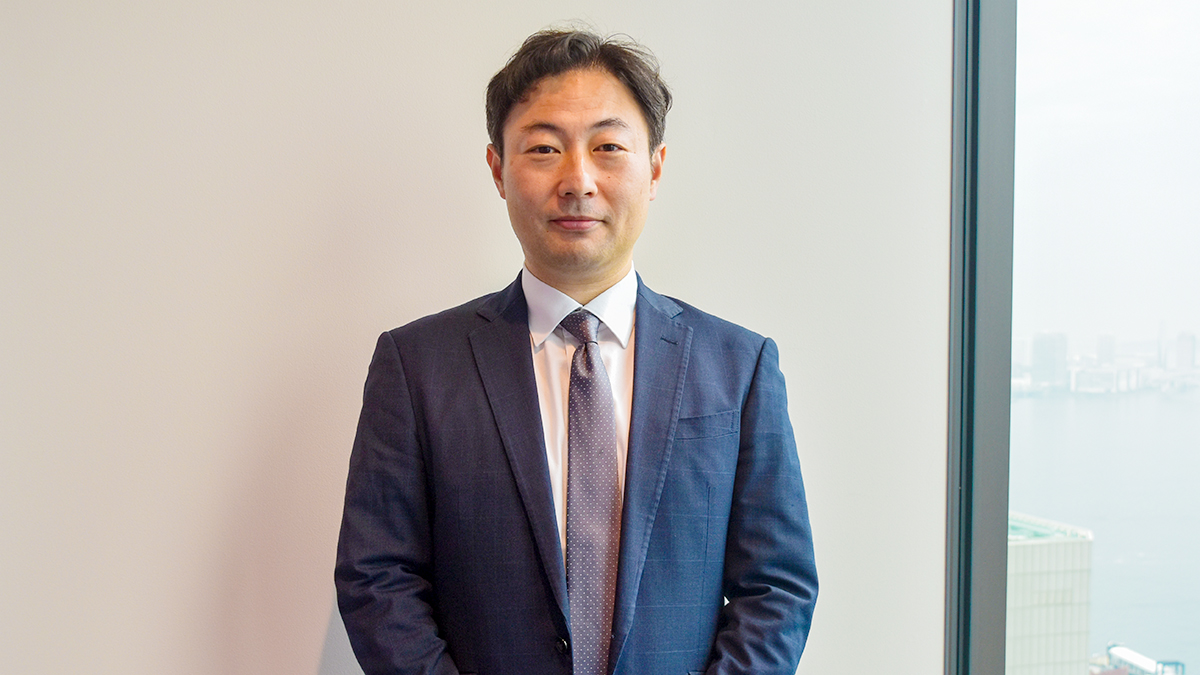
Hiroaki Kimura, General Manager of the Public Infrastructure Business Department at ORIX, explains: "While airport operation was a new field for us, we believed that both Kansai and Itami airports also had the aspect of commercial facilities, where we could use our experience in developing and operating commercial properties."
Beyond sector fit, he points to something more structural. From the outset, both ORIX and VINCI committed to operational improvements rather than just treating it as an investment. "We and VINCI were able to share a commitment to this very long-term, 44-year business," Mr. Kimura says.
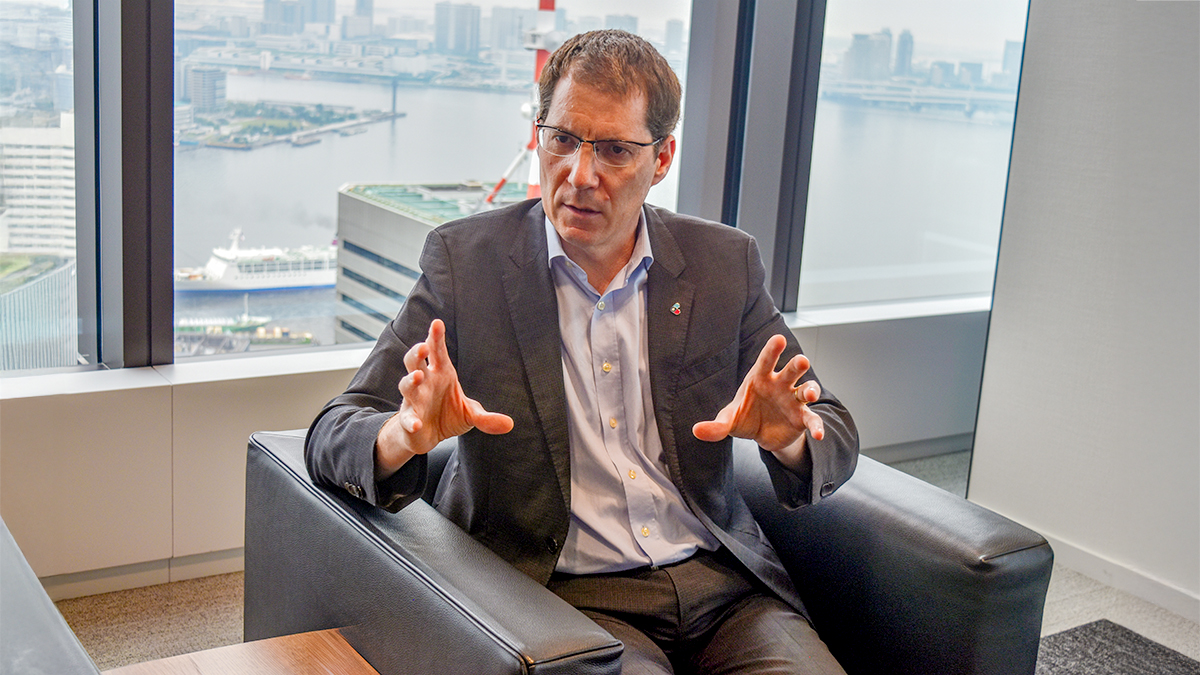
This is seconded by Benoit Rulleau, Co-CEO of Kansai Airports, who represents VINCI on the management team: "We have a similar DNA, a similar long-term vision," he says. "We are not pension funds. It is not a passive financial investment."
Fully aware that joint ventures are notoriously difficult to sustain, senior management worked hard to merge corporate cultures – not just ORIX and VINCI but also those of the two previous airport operators. "As CTO, I was in almost eight hours of meetings a day with my team," Mr. Rulleau remembers. The leadership team also recognized that alignment required more than boardroom discussions and organized a joint trip to a hot spring resort to build personal bonds across cultural lines.
"Today it is really just one company," Mr. Rulleau says. The current team of around 4,000 people is, in his assessment, genuinely united. For ORIX, the experience has changed its entire perspective on the sector. "Our view has shifted from an initial 'challenge into a new area' to recognizing airport concessions as a successful model for operating public infrastructure," says Mr. Kimura.
Strong start followed by a global shock
The commercial trajectory between 2016 and 2019 exceeded even the original forecasts. At KIX, international, passenger traffic grew by around 10% annually, with foreign visitor numbers increasing by as much as 20% in some years, driven above all by a surge in inbound tourism from China, where high-spending visitors transformed the economics of the airports' retail operations. The challenge during this period was not growth itself but managing it.
Then came COVID-19. Mr. Rulleau does not understate it. "The pandemic was so much bigger than any other crisis in aviation before," he says KIX went from more than 40,000 departing international passengers per day to, at the nadir, fewer than 100. Revenue evaporated. The team, however, held together. "There were some tensions, of course," Mr. Rulleau recalls, "but also a lot of strength from everyone."
The real test of the joint venture's character came in the decision taken in March 2021, at the height of the crisis, to proceed with the full renovation of KIX's Terminal 1. Mr. Kimura describes how that decision was reached. "ORIX, VINCI, and Kansai Airports held many discussions on whether to stop the investment," he says. "In the end, we shared a strong belief that air travel demand would recover and decided to complete the renovation of the main functions by the time of the 2025 Osaka Expo." It was, he adds, a decision supported by national and local governments, the regional business community, and the financial institutions that provided backing to Kansai Airports.
There was, too, an unexpected silver lining. A terminal renovation carried out under normal operations would have been extremely disruptive. With the airport effectively empty, construction became significantly easier.
Rebuilding the heart of KIX
The Terminal 1 renovation is the defining infrastructure achievement of the concession's first decade. The original concept of building an entirely new terminal was rejected in favor of reconfiguring existing space. The project began in May 2021, took five years and four phases to complete, and involved a total investment of JPY70 billion ($440 million). The main section, which opened in phase 3, was completed in March 2025 in time for the Expo, nearly doubling KIX's international passenger capacity from around 23 million annually (equivalent to the FY2018 figure) to 40 million.
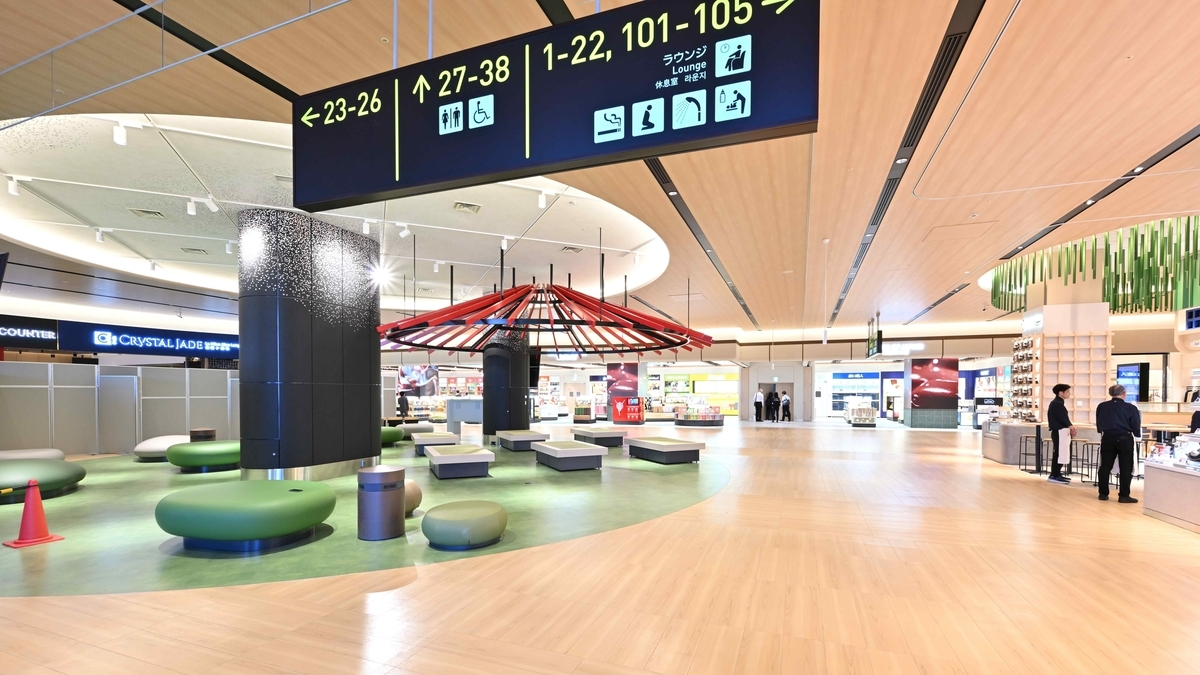
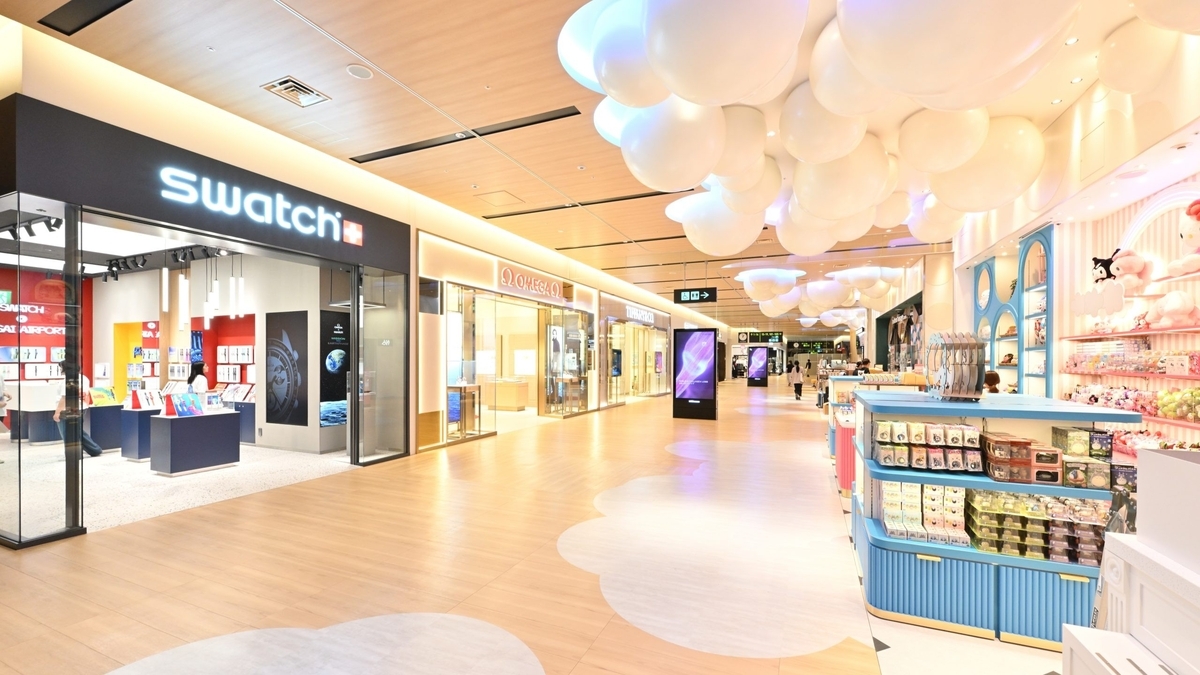
The renovation was strongly shaped by VINCI’s ideas and expertise, drawing on its extensive experience in airport transformation. But Mr. Rulleau is quick to credit ORIX's instincts. "ORIX management very quickly understood the value of the idea and were supporting it," he says. The opposition came from elsewhere: roughly 80% of staff were initially against the project, and airlines were also skeptical at first. Winning them over required years of consultation. "All the time spent to align everyone and agree on the design is time well spent," Mr. Rulleau argues. "Because after that, nobody came back to argue."
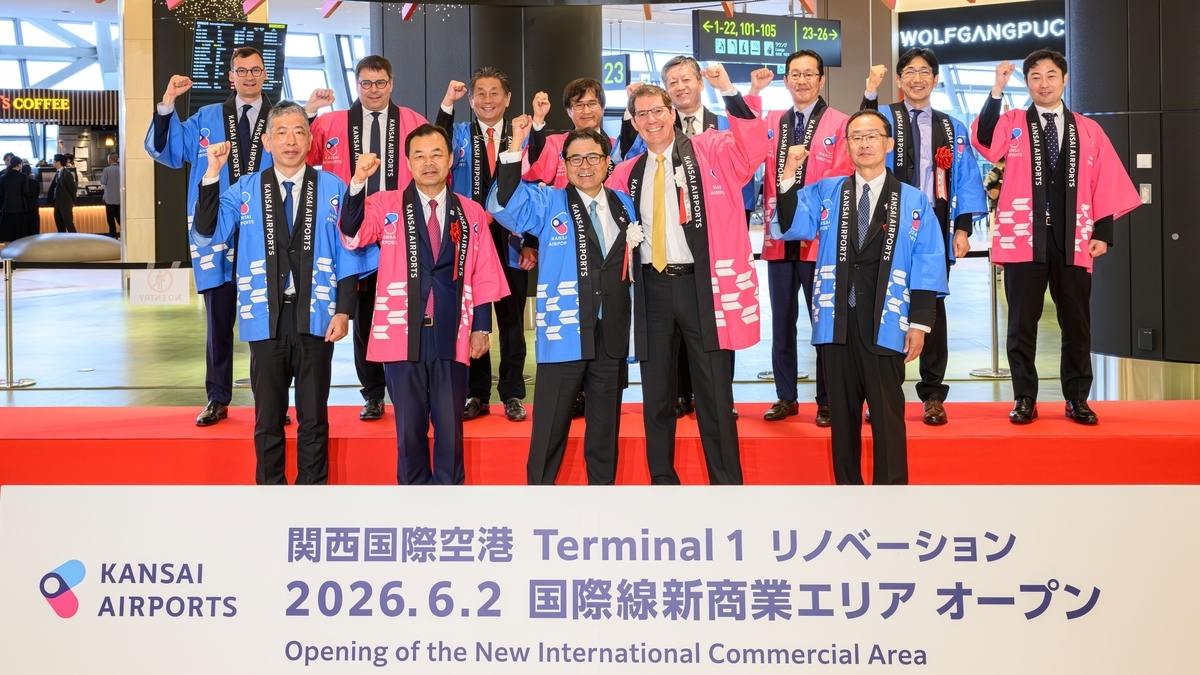
Delivery was managed through a dedicated project team reporting directly to the co-CEOs, with bi-weekly and sometimes weekly budget reviews. The result: the terminal was opened on time, on budget, and has been outperforming projections for footfall and passenger spending since opening day.
Creating greener airports
Environmental performance is woven into the business model. Kansai Airports set a target of reducing its own CO2 emissions by 50% by 2030 compared to 2016 levels, and net zero across all operations by 2050. Practical measures include switching aircraft from their own auxiliary power units to airport-supplied ground power, energy-saving HVAC systems, LED lighting, and real-time energy monitoring.
Mr. Rulleau's broader concern is with the sector's structural emissions challenge. Aviation accounts for roughly 3% of global CO2 emissions and closer to 8% when the climate impact of contrails and high-altitude effects is included. While demand has proved more inelastic than expected, he does worry that rising decarbonization costs (the price of kerosene has more than doubled over the past decade) will eventually impact demand.
Looking to the next decade
With the Terminal 1 renovation complete and passenger numbers back on a growth trajectory - led now by South Korean visitors, who have grown by close to 20% since Chinese numbers fell, and by a healthy mix of other Asian markets - Kansai Airports is setting its sights on the next 10 years.
Traffic development is the first priority. KIX still has no direct service to Jakarta, despite more than 200 travelers a day making the journey between Indonesia and Osaka by connecting through Tokyo, Seoul or Singapore. "Three hundred million people living in Indonesia, lots of business with Japan, and no flights," Mr. Rulleau says. "That is not right." India presents a similar opportunity: there is not a single direct flight between KIX and an Indian city.
North American routes are another gap, with roughly 20 times as many North America flights serving Tokyo as Osaka - a ratio Mr. Rulleau regards as commercially indefensible. United Airlines' announcement of a new daily direct service between Los Angeles and KIX, launching in March 2027, is a sign that the gap is beginning to close. To address these imbalances, Kansai Airports works closely with airlines and participates in aviation industry events.
Cargo is the second priority. Much of the freight generated by the Kansai region currently travels to North America via Tokyo because KIX lacks sufficient belly capacity on passenger routes. A cargo infrastructure renovation project, KIX Cargo Next, is planned.
International cargo dynamics are also changing significantly. The rapid expansion of e-commerce has increased demand for the efficient handling of smaller air freight shipments, requiring both facility upgrades and process improvements. At the same time, the growing workforce at KIX calls for further investment in employee welfare, including improved break areas and workplace facilities.
The third driver is longer-term: reaping the benefits of the investments already made in KIX Terminal 1 and ITAMI, combined with the 2030 opening of Japan’s first Integrated Resort in Osaka (another ORIX project) and the continued growth of inbound tourism across Kansai.
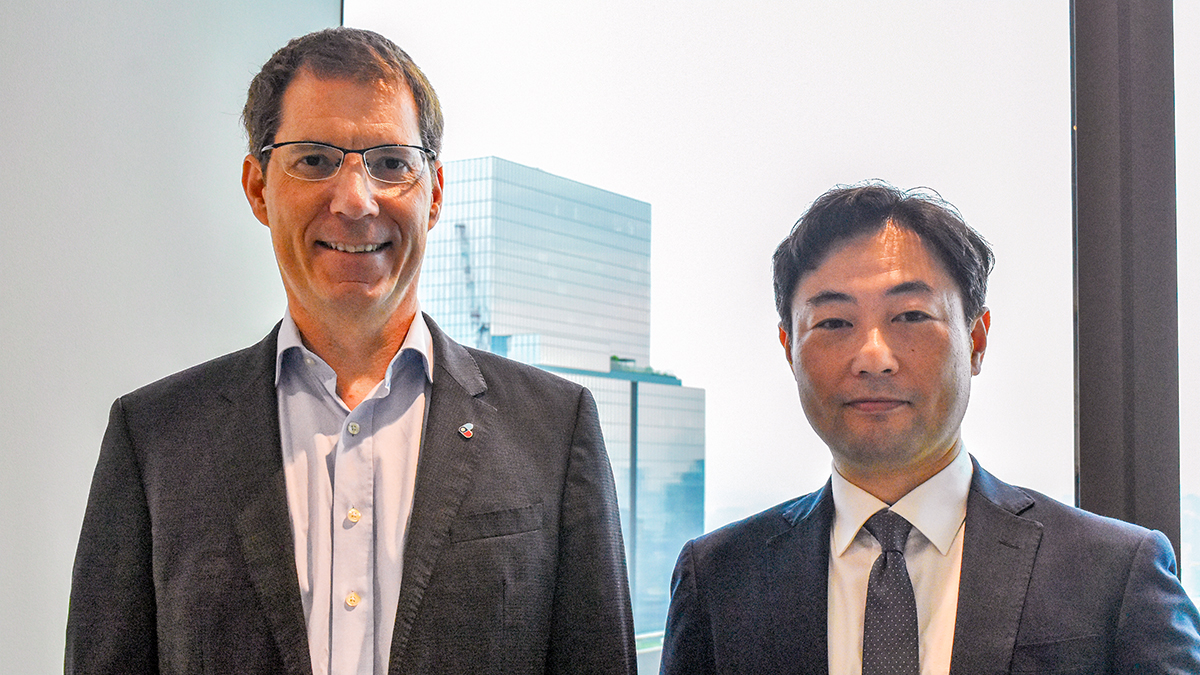
Whatever the future holds for Kansai Airports, there is a settled confidence at the top of the organization following a decade in which it has knitted together diverse cultures and overcome significant challenges to turn itself into an outstanding commercial success. "At the beginning," Mr. Rulleau says, "there was a strong feeling that this would go well. Today, that is not a feeling anymore. It is real."

